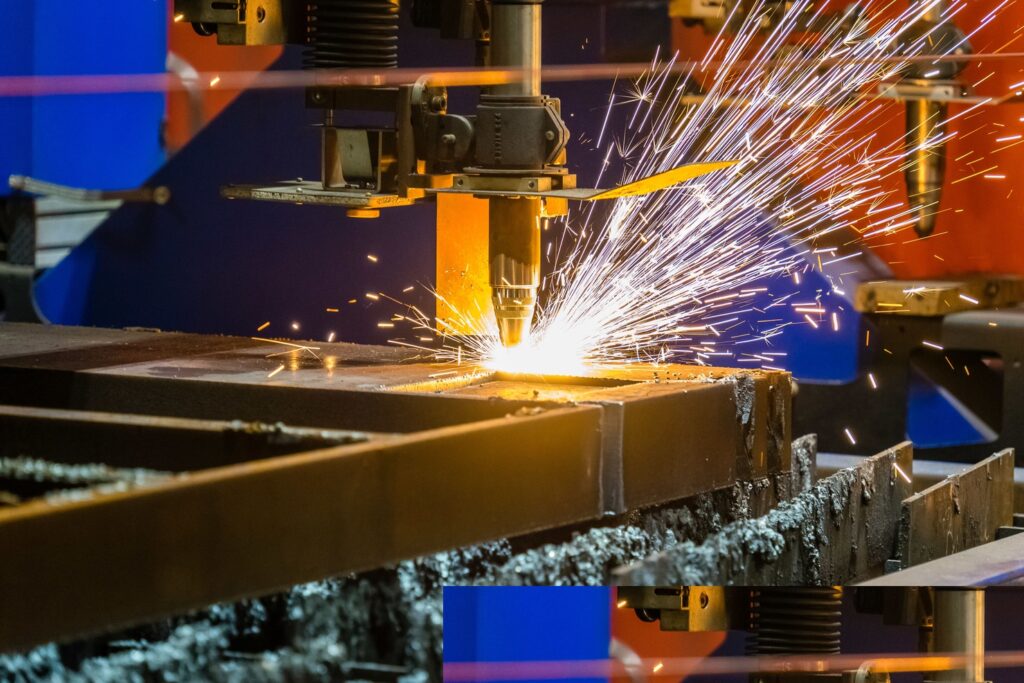
The era of single-function laser equipment is over. Today’s manufacturing landscape demands versatility, efficiency, and cost-effectiveness that only multi-function systems can deliver. At Azlo Laser, we’ve witnessed firsthand how 3-in-1 laser systems are transforming workshops across Canada, offering unprecedented flexibility that streamlines operations while maximizing return on investment.
The Multi-Function Revolution
Traditional manufacturing workflows have long required separate machines for welding, cutting, and cleaning operations. This fragmented approach creates bottlenecks, increases equipment costs, and demands extensive floor space. The 3-in-1 laser system eliminates these limitations by integrating three essential functions into one compact, powerful platform.
Our handheld fiber laser welders exemplify this revolutionary approach. With the simple change of a nozzle and adjustment of parameters, operators can seamlessly transition between welding stainless steel components, cutting aluminum sheets, and cleaning rust from steel surfaces. This versatility transforms how manufacturers approach their daily operations.
Welding: Precision Meets Speed
Laser welding represents the pinnacle of precision joining technology. Unlike traditional MIG or TIG welding, laser welding creates a highly concentrated heat source that enables deep penetration with minimal heat-affected zones. This focused energy delivery produces superior weld quality while reducing distortion and eliminating the need for extensive post-processing.
The speed advantage is equally impressive. Laser welding operates 4-5 times faster than conventional tungsten inert gas (TIG) and metal inert gas (MIG) processes. This dramatic improvement in throughput directly translates to increased productivity and reduced labor costs. For manufacturers handling high-volume production runs, this speed differential can mean the difference between meeting tight deadlines and losing competitive advantage.
Heat input control is another critical advantage. Laser welding delivers significantly lower total heat input compared to traditional arc welding methods. This controlled heat application prevents metallurgical issues like cracking and distortion while maintaining the structural integrity of surrounding materials. The result is consistently high-quality welds that meet stringent industrial standards.
Cutting: Unmatched Precision and Flexibility
Laser cutting technology offers exceptional precision with tolerances as tight as ±0.1mm. This level of accuracy ensures parts are manufactured to exact specifications without requiring secondary operations. The repeatability of laser cutting, with variations of just ±0.05mm, guarantees consistent part quality across production runs.
The non-contact nature of laser cutting provides significant advantages over mechanical cutting methods. Traditional cutting tools experience wear that affects cut quality over time, but laser cutting maintains consistent performance throughout its operational life. This reliability reduces maintenance costs and eliminates the need for frequent tool replacement.
Material versatility is another key strength. Our 3-in-1 systems can cut through stainless steel, aluminum, carbon steel, and various alloys with thicknesses ranging from thin sheets to substantial plates. This capability allows manufacturers to handle diverse projects without investing in multiple specialized cutting tools.
Cleaning: The Chemical-Free Solution
Laser cleaning technology represents a paradigm shift in surface preparation. Traditional cleaning methods like sandblasting, chemical treatment, and manual scraping create environmental hazards, generate waste, and often damage underlying surfaces. Laser cleaning eliminates these concerns by using precisely controlled laser energy to remove contaminants without affecting the base material.
The selective cleaning capability of laser technology is particularly valuable. The system can be fine-tuned to remove specific contaminants like rust, paint, or oxidation while leaving the underlying metal completely intact. This precision prevents the surface damage commonly associated with abrasive cleaning methods.
Environmental benefits are substantial. Laser cleaning produces no chemical waste, generates minimal secondary contamination, and eliminates the need for hazardous cleaning compounds. This clean process aligns with increasingly stringent environmental regulations while reducing disposal costs and workplace safety concerns.
The Economic Advantage
Consolidating three functions into one system delivers immediate cost savings. Rather than purchasing separate welding, cutting, and cleaning equipment, manufacturers can achieve all three capabilities with a single investment. This consolidation reduces initial capital expenditure while simplifying equipment financing and budgeting.
Operational efficiency gains extend beyond equipment costs. With one system handling multiple functions, operators require training on only one platform rather than mastering three different machines. This simplified training reduces onboarding time and ensures consistent operational procedures across all functions.
Floor space optimization is another significant benefit. Manufacturing facilities often struggle with space constraints, and 3-in-1 systems dramatically reduce equipment footprint. The space savings can be redirected to production areas, storage, or additional equipment as business needs evolve.
Maintenance and Reliability
Traditional multi-machine setups multiply maintenance requirements and potential failure points. Each separate machine requires individual maintenance schedules, spare parts inventories, and service contracts. A 3-in-1 system consolidates these requirements into a single maintenance program, reducing complexity and administrative overhead.
Laser systems typically require minimal maintenance compared to traditional equipment. There are no consumable electrodes, welding wires, or cutting blades to replace regularly. This reduces ongoing operational costs and minimizes production interruptions caused by maintenance activities.
Built-in monitoring systems continuously track laser performance, cooling system status, and component health. This real-time monitoring enables predictive maintenance scheduling and prevents unexpected failures that could disrupt production.
Applications Across Industries
Automotive manufacturing benefits tremendously from 3-in-1 laser systems. These systems can weld exhaust components, cut body panels, and clean surfaces for painting or coating application. The ability to handle all three operations with one system streamlines production workflows and ensures consistent quality across diverse applications.
Aerospace applications demand the highest precision and quality standards. Laser welding produces the clean, strong joints required for critical aircraft components, while laser cutting enables precise fabrication of complex geometries. The cleaning function ensures surfaces meet stringent cleanliness requirements before assembly or coating.
General fabrication shops find 3-in-1 systems particularly valuable for their versatility. These facilities often handle diverse projects requiring different processes, and the ability to switch between welding, cutting, and cleaning functions without changing equipment maximizes operational flexibility.
The Canadian Manufacturing Advantage
Canada’s laser welding equipment market is experiencing robust growth, with projections indicating expansion from $2.5 billion in 2024 to $4.5 billion by 2033. This growth reflects the increasing adoption of advanced laser technologies across Canadian manufacturing sectors.
The National Research Council of Canada (NRC) continues to advance laser technology development, working with industry partners to enhance performance and cost-effectiveness. These collaborative efforts ensure Canadian manufacturers have access to cutting-edge laser solutions that maintain competitive advantages in global markets.
Canadian manufacturers are increasingly recognizing the productivity benefits of advanced laser systems. The ability to perform multiple functions with one system aligns with the country’s focus on manufacturing efficiency and technological innovation.
Training and Implementation
The learning curve for 3-in-1 systems is surprisingly manageable. While operators must understand the parameters for each function, the common control interface and similar operational procedures reduce training complexity. Most operators can achieve proficiency across all three functions within a few days of structured training.
Parameter libraries built into modern systems simplify operation further. Common material and thickness combinations have preset parameters that eliminate guesswork and reduce setup time. This feature enables operators to quickly transition between different applications without extensive parameter adjustment.
Safety considerations are consistent across all three functions. The same laser safety protocols, protective equipment, and environmental controls apply whether welding, cutting, or cleaning. This consistency simplifies safety training and ensures uniform protection standards.
Future-Proofing Your Investment
Technology evolution continues to enhance 3-in-1 system capabilities. Software updates can add new parameter sets, improve automation features, and enhance user interfaces without requiring hardware replacement. This upgradability protects equipment investments and extends useful life.
Industry 4.0 integration is becoming increasingly important in manufacturing. Modern 3-in-1 systems can interface with production management systems, quality control databases, and predictive maintenance platforms. This connectivity enables data-driven decision making and supports advanced manufacturing strategies.
Scalability options allow systems to grow with business needs. Additional power modules, enhanced cooling systems, and expanded automation capabilities can be added as production requirements evolve. This modularity ensures the initial investment remains relevant as operations expand.
Choosing the Right System
Power requirements depend on the materials and thicknesses you process most frequently. Our 1,500W handheld fiber laser welders handle most general fabrication requirements, while our 3,000W systems tackle heavier materials and faster production speeds.
Cooling system selection impacts operational flexibility. Water-cooled systems provide higher power and continuous operation capability, while air-cooled systems offer portability and simplified setup. The choice depends on your specific operational requirements and facility constraints.
Training and support should be key considerations in system selection. Comprehensive training programs and responsive technical support ensure maximum return on your investment. At Azlo Laser, we provide complete training and ongoing support to help you realize the full potential of your 3-in-1 system.
The Bottom Line
The 3-in-1 advantage represents more than technological innovation—it’s a strategic approach to manufacturing efficiency. By consolidating welding, cutting, and cleaning capabilities into one versatile system, manufacturers can reduce costs, improve quality, and increase operational flexibility simultaneously.
Canadian manufacturers who embrace this technology gain competitive advantages in both domestic and international markets. The ability to respond quickly to diverse customer requirements while maintaining high quality standards becomes a significant differentiator in today’s competitive landscape.
The future of manufacturing belongs to those who can adapt quickly and efficiently to changing requirements. 3-in-1 laser systems provide the flexibility and capability needed to thrive in this dynamic environment. The question isn’t whether to adopt this technology—it’s how quickly you can integrate it into your operations.
For manufacturers ready to revolutionize their operations, the 3-in-1 advantage offers immediate benefits and long-term strategic value. The integration of welding, cutting, and cleaning in one system isn’t just an efficiency improvement—it’s a fundamental transformation of how modern manufacturing can operate.
According to the Canada Foundation for Innovation, laser technology continues to drive innovation across multiple sectors, with applications ranging from precision manufacturing to advanced research. This institutional support reinforces Canada’s position as a leader in laser technology adoption and development.
The revolutionary 3-in-1 advantage isn’t just about having one machine do three jobs—it’s about reimagining how modern manufacturing can operate with maximum efficiency, flexibility, and profitability. For Canadian manufacturers ready to embrace this transformation, the benefits are immediate and the strategic advantages long-lasting.