

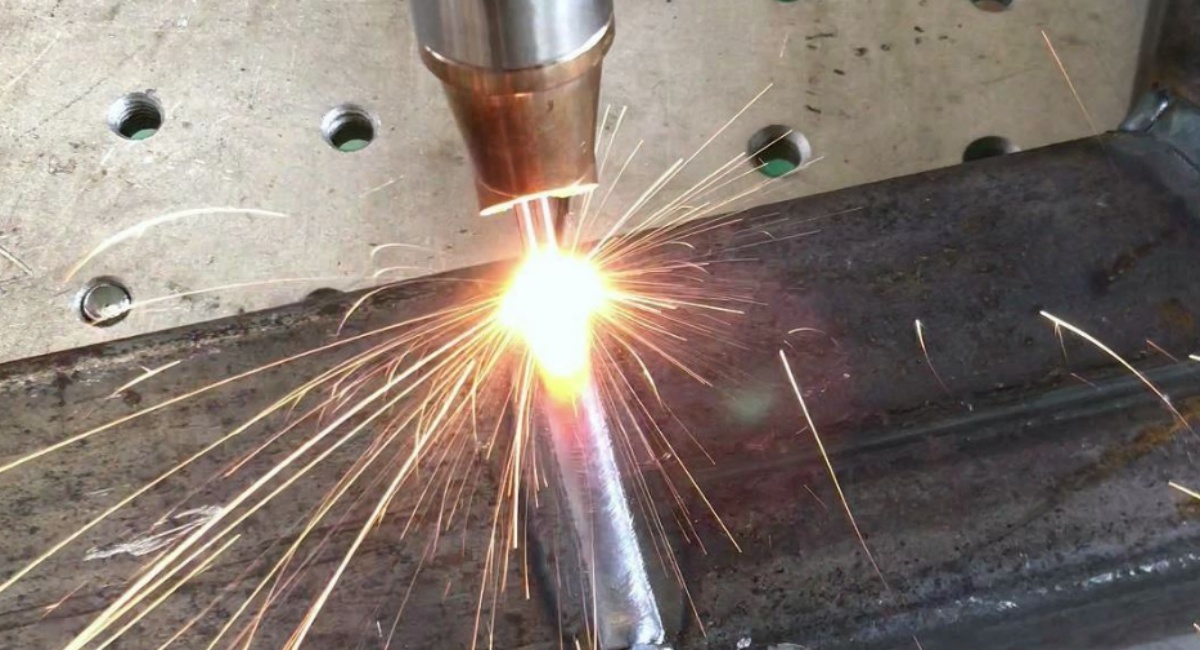
Modern manufacturing demands have reached a critical juncture where traditional welding methods can no longer keep pace with the need for speed, precision, and efficiency.
AZLO Laser welders represent a revolutionary leap forward in welding technology, delivering speed advantages that transform production capabilities across industries. These advanced systems operate 3 to 10 times faster than conventional TIG and MIG welding methods, fundamentally changing how manufacturers approach welding operations and project timelines.
The Speed Advantage: Quantifying Laser Welding Performance
The speed differential between laser welding and traditional methods represents one of the most compelling reasons for manufacturers to embrace this advanced technology.
Laser welding systems consistently achieve welding speeds of 4-10 times faster than TIG welding, with some applications demonstrating even greater performance gaps. For materials up to 0.5 inches thick, laser welding can operate up to 50 times faster than MIG welding, particularly when automated systems are employed.
This dramatic speed increase translates directly into measurable productivity gains. Industrial applications routinely document cycle time reductions of 20% to 40% when transitioning from traditional welding methods to laser systems.
In high-volume production environments, laser welding speeds can exceed 200 inches per minute, compared to the typical 20-50 inches per minute achieved with conventional MIG welding on similar applications.
While traditional welding methods rely on broader heat zones that require careful temperature control and often multiple passes, laser welding delivers focused energy that rapidly melts and fuses materials without extensive preheating.
This fundamental difference in heat application methodology allows laser systems to complete welds in a fraction of the time required by conventional techniques.
Transforming Manufacturing Throughput
The productivity implications of laser welding’s speed advantages extend far beyond simple time savings.
Manufacturing operations implementing laser welding technology report significant improvements in overall throughput, enabling companies to meet increasingly demanding production schedules while maintaining quality standards. AZLO’s laser welding systems capitalize on these speed advantages through their advanced fiber laser technology.
The company’s range includes models from 1,500W to 3,000W power outputs, each engineered to deliver maximum welding speeds appropriate for different material thicknesses and applications. These systems can penetrate materials up to 12mm (0.5 inches) in thickness while maintaining the rapid processing speeds that define laser welding technology.
Automated production lines benefit significantly from laser welding’s speed capabilities. Unlike manual welding processes that depend on operator skill and experience, laser welding systems can operate continuously at optimal parameters, maintaining consistent high-speed performance throughout production runs.
This reliability factor, combined with inherent speed advantages, enables manufacturers to achieve 99% or higher yield rates while processing parts at unprecedented speed.
The integration of laser welding into existing manufacturing workflows typically results in dramatic reductions in cycle times.
Project Timeline Optimization
The speed advantages of AZLO laser welders culminate in efficiency gains that transform entire project timelines. Traditional welding bottlenecks that once constrained production schedules are eliminated, allowing manufacturers to compress delivery timeframes and respond more rapidly to market demands.
Post-weld processing time reductions represent an often-overlooked speed advantage. Laser welding produces clean, precise joints that require minimal or no secondary operations such as grinding, polishing, or finishing.
The minimal heat-affected zone (HAZ) produced by laser welding prevents warping and distortion that commonly occurs with traditional methods. This characteristic eliminates time-consuming straightening and correction procedures, while also preserving dimensional accuracy that might otherwise require additional machining operations.
This elimination of downstream processing steps adds to the initial speed benefits, creating overall project timeline improvements that exceed the raw welding speed differential. When parts are completed correctly on the first pass, project schedules remain on track without costly delays for redoing shoddy work.
Industry-Specific Speed Benefits
Different industries experience varying degrees of benefit from laser welding’s speed advantages, with applications ranging from automotive manufacturing to precision electronics assembly.
The automotive industry has embraced laser welding technology specifically for its speed capabilities, where high-volume production demands make even small improvements in cycle time economically significant.
Automotive manufacturers routinely achieve welding speeds exceeding 200 inches per minute using laser systems, enabling the rapid assembly of body panels, structural components, and drivetrain elements.
Electric vehicle battery production particularly benefits from laser welding’s speed, as the precise joining of battery cells and components can be accomplished at rates that support mass production requirements.
In aerospace applications, laser welding’s speed advantages enable the rapid assembly of complex components while maintaining the strict quality standards required for flight-critical applications. The ability to complete high-strength welds quickly reduces manufacturing time for expensive aerospace assemblies, improving cost-effectiveness without compromising safety or performance.
Medical device manufacturing leverages laser welding’s speed for high-volume production of precision components. The technology’s ability to create clean, biocompatible joints rapidly supports the production demands of disposable medical devices and implantable components where both speed and quality are essential.
Operational Efficiency Gains
The speed advantages of AZLO laser welders create operational efficiency gains that extend throughout manufacturing organizations.
Energy efficiency improvements result from shorter process times, as laser systems complete welds quickly and then shut down, reducing overall power consumption compared to traditional methods that operate for extended periods.
Labor productivity increases substantially when welding speeds improve by factors of 3-10 times. Operators can complete more work per shift, and the simplified operation of laser welding systems reduces the skill requirements and training time needed for effective operation. This combination of faster processing and easier operation creates multiplicative productivity improvements.
Setup and changeover times are significantly reduced with laser welding systems. Digital storage of welding parameters enables rapid transitions between different products or specifications, minimizing downtime and maximizing productive welding time. This flexibility particularly benefits manufacturers producing multiple product lines or customized components.
The non-contact nature of laser welding eliminates tool wear and replacement cycles that consume time in traditional welding operations. Tungsten electrodes, contact tips, and other consumables that require regular maintenance and replacement in conventional systems are unnecessary with laser technology, reducing both maintenance time and operational interruptions.
Competitive Advantages Through Speed
Manufacturers implementing AZLO laser welding technology gain substantial competitive advantages through their enhanced speed capabilities and superior quality.
Faster project completion enables more responsive customer service, with shorter lead times becoming a significant differentiator in competitive markets.
Cost per unit reductions result from higher throughput capabilities. When the same labor and facility costs are spread across more completed units due to faster welding speeds, unit costs decrease substantially. One documented example showed total costs dropping from $5.84 per part with TIG welding to $0.96 per part with laser welding technology.
Market responsiveness improves when production can ramp up quickly. The ability to complete projects 3-10 times faster than competitors enables manufacturers to capture time-sensitive opportunities and respond to urgent customer requirements that slower production methods cannot accommodate.
The quality consistency achievable with high-speed laser welding eliminates the traditional trade-off between speed and quality that characterizes conventional welding methods. Manufacturers can deliver superior products faster, creating competitive advantages in both delivery time and product performance.
Innovation opportunities expand when welding speed constraints are removed. Product designers can incorporate welded assemblies that would be economically impractical with slower traditional methods, opening new market possibilities and enabling more sophisticated product architectures.
The speed delivered by AZLO laser welders fundamentally transforms manufacturing capabilities, enabling companies to achieve production velocities that seemed impossible with traditional welding methods. As industry demands continue to intensify, the 3-10 times speed advantage of laser welding technology becomes not just beneficial, but essential for maintaining competitive viability in modern manufacturing environments.
For more information about AZLO’s cutting-edge laser welding systems, explore the comprehensive range of solutions designed to revolutionize your welding operations. According to the American Welding Society, laser welding represents the future of high-speed, precision manufacturing, making technologies like AZLO’s systems essential investments for forward-thinking manufacturers.
